
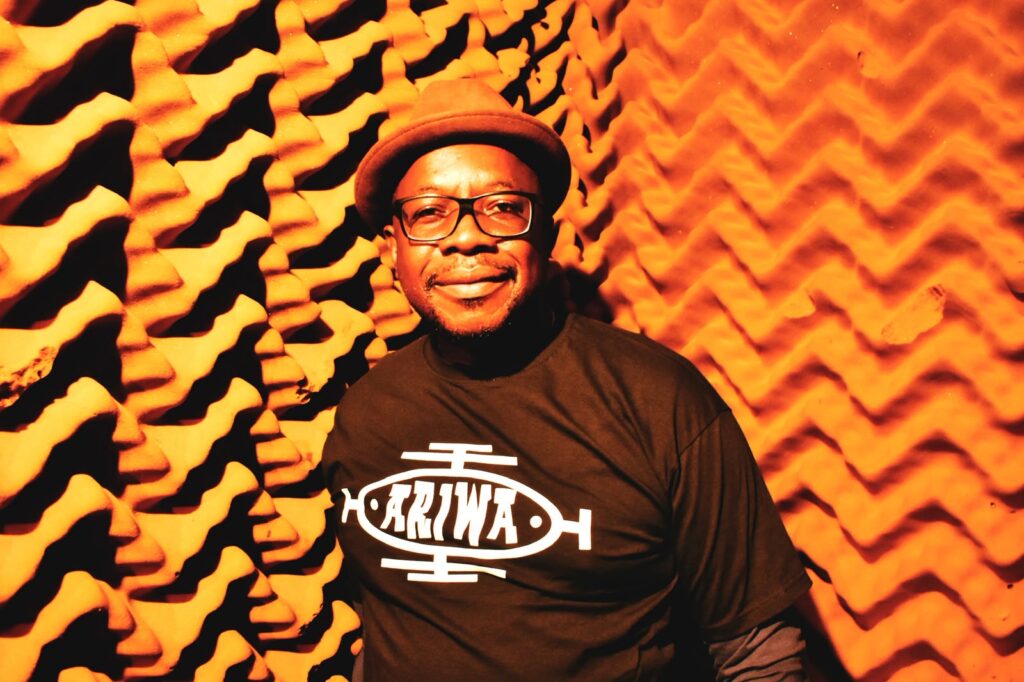
L’INTERVIEW DÉTENTE DE MAD PROFESSOR, par DAN AYASSOU
Dan : First things first : how are we feeling ?
Tout d’abord : comment tu vas ?
Mad Professor : I feel okay ! Very hot but okay !
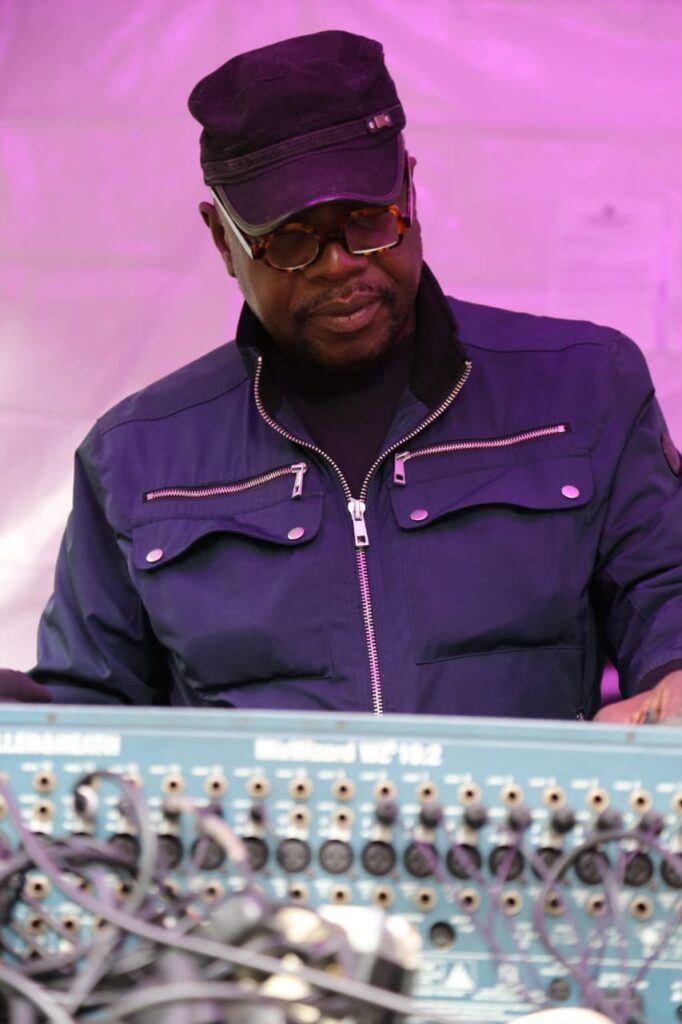
Je vais bien ! Il fait très chaud mais ça va !
Was this your first time at Les Nuits Secrètes ?
C’était ta première fois aux Nuits Secrètes ?
M.P : At this festival yes.
Dans ce festival oui.
But not the first one time in France though ?
Mais pas la première fois en France ?
M.P : Oh no, I’m in France every few months, France taught me well !
Oh non, je suis en France plusieurs fois par an, je connais bien la France !
Yeah man, and we glad to know you as well ! As usual, you’re still lighting it up, and the set was full of good vibes, how do you feel about it ?
Et on est très content de te connaitre aussi ! Comme d’habitude, tu as tout déchiré, le set était plein de bonnes vibes, comment tu te sens ?
M.P : I feel okay but, you know obviously, it was hot and it was the first time for a lot of people, so… Every day, every show, it’s different ! This was different, largely because of the heat, the time of the set, but you know there’s no problem ! Some people enjoyed it, for some people it was the first time and you could feel they were like « What’s that, what’s going on ? ».
Je me sens bien mais, bien sûr tu as remarqué, il faisait chaud et c’était la première fois pour beaucoup de monde donc… Chaque jour, chaque set est différent ! C’était différent, principalement à cause de la chaleur, l’heure à laquelle j’ai joué, mais pas de problème ! Des gens ont apprécié, pour d’autres c’était la première fois, et je pouvais sentir qu’ils étaient en mode « Mais qu’est-ce que c’est, qu’est-ce qu’il se passe ? »
Well obviously for you it was not the first time, you’re a pioneer of the dub stage, which can be less known in France than in the UK, could you explain what it is and what it represents ?
Bien sûr pour toi ce n’était pas la première fois, tu es un pionnier de la scène dub, qui peut être moins connue en France qu’au Royaume-Uni. Tu pourrais expliquer ce que c’est et ce que ça représente ?
M.P : Dub is like the first form of electronic music, where the engineer manipulates and remakes and mix, and the engineer becomes the artist. He signs his signature on the mix, that’s the engineer. Like King Tubby was, like King Prince Jammy is… They have a certain style, and that is dub. Dub is like an instrumental, but instead of being just an instrumental with a lead instrument like a flute or a sax, it’s lead by the effects, the sound effects, echoes and reverbs and…
La dub, c’est la première forme de musique électronique, là où l’ingénieur du son manipule, recréée et mixe, et l’ingénieur devient l’artiste. Il signe le mix de sa patte, c’est l’ingénieur. Comme l’était King Tubby, comme l’est King Prince Jammy… Ils ont un certain style, et c’est ça la dub. C’est comme une instrumentale, mais au lieu d’être menée par un instrument comme une flûte ou un saxophone, elle est menée par des effets, des échos, des réverbérations et…
And that’s actually how you started. I guess that’s kind of where you got your name : Mad Professor, can you tell us about it ?
C’est d’ailleurs comme ça que tu as commencé. Je suppose que c’est de là qu’est venu ton nom : Mad Professor ?
M.P : When I was working in the studio, I started to experiment different things and… Like when my friends were playing cricket and football, I was playing with gadgets. I was building amplifiers and radios… So instead of going and play football, they were seeing me doing this and were saying : « Oh, here’s the mad man, he’s the mad professor ! ». And that’s how it stuck !
Quand je travaillais au studio, j’ai commencé à expérimenter plusieurs choses et… Genre quand mes amis jouaient au cricket ou au foot, moi je jouais avec des gadgets. Je construisais des amplis et des radios… Au lieu de jouer au foot, ils me voyaient faire ces choses-là et ils disaient : « Oh, voilà le gars fou, c’est le Mad Professor ! ». Et c’est resté !
It stuck until this day ! You’ve been killing it since the 80’s, impressive longevity, how did you stay at the top for that long ?
Jusqu’à aujourd’hui ! Depuis les années 80, tu es au sommet de ton genre en faisant preuve d’une longévité impressionnante, comment on dure si longtemps ?
M.P : The main thing is to keep surprising the audience, and to keep surprising yourself. Because my creativity is energized by surprise, so the more I’m surprising the audience, the more I’m surprising myself. I test my surprises on the audience and then I see the reactions. And then I’m like « okay, I’m going to try that », I try that in the studio and then I try that at the next show, and then it grows.
Le plus important est de continuer à surprendre le public, et de continuer à te surprendre toi-même. Parce que ma créativité puise son énergie dans la surprise, donc au plus je surprends le public, au plus je me surprends. Je teste mes surprises sur le public puis j’observe les réactions. Après je me dis « ok je vais essayer ça », j’essaye ça en studio et au show suivant, et ça prend de l’ampleur.
Are you still surprised by upcoming artists ?
Tu es toujours surpris par les nouveaux artistes
M.P : Not so much… I’d like to be ! But I’m not, because everything, mostly 95% of new music I’d say, is made by computers, is digital. The wrong thing with computers is that you can only be so creative, because it’s not some human behind, and it’s a little bit limited. Especially when you’re coming from the analog era ! With analog we could do feedbacks, we could do all kind of phase differences… But with digital it’s one thing or the other, it’s predictable.
Pas tant… J’aimerais l’être ! Mais ce n’est pas le cas, parce que tout ou presque, je dirais environ 95% de ce qui sort, est fait par ordinateur, est digital. Le problèmes avec les ordinateurs, c’est que tu ne peux être créatif que jusqu’à un certain point, parce que ce n’est pas un humain qui fait tout, et ça peut être limité. Surtout quand tu viens de l’époque de l’analogique ! Avec l’analogique on pouvait gérer les retours, on pouvait faire toute sorte de déphasage… Mais avec le digital c’est soit l’un soit l’autre, c’est prévisible.
Like technology might be killing creativity, bit by bit ?
Donc la technologie serait en train de tuer la créativité, petit à petit ?
M.P : I think so ! You can only do so much with it.
C’est ce que je pense ! Tu ne peux aller que jusqu’à un certain point.
So what advice would you give to young artists coming up right now ? To go back to analog ?
Alors quel conseil donnerais-tu aux jeunes artistes qui montent actuellement ? Revenir vers l’analogique ?
M.P : I think analog is a good inspiration for creativity, and they should do that. It costs a bit more money, like using a tape costs more than if you’re using digital, but I think it could be more rewarding. It’s up to them ! If they try and do this, spend some time with a tape machine, then the ears would be rewarded.
Pour moi l’analogique est une bonne inspiration pour la créativité, c’est ce qu’ils devraient faire. Ça coûte un peu plus cher, utiliser des bandes coûte plus cher que si tu es en mode digital, mais je trouve ça plus enrichissant. C’est à eux de voir ! S’ils essayent de le faire, de passer du temps sur des magnétos, alors les oreilles seraient récompensées.
And are you teaching that to some youth ?
Et tu transmets ton savoir à des jeunes ?
M.P : Well I tell people, don’t I ? From the the youth… they think they know so you can’t teach them. I tell them, it’s up to them to take it or leave it.
Je le dis aux gens, non ? Pour les jeunes… ils pensent savoir donc tu ne peux pas leur apprendre. Je leur dis, c’est à eux de le prendre ou de le laisser.
If they listen, the listen, if they don’t, it’s on them…
S’ils écoutent tant mieux, sinon c’est leur dos…
M.P : Yeah, most definitely !
Voilà exactement !
So in the end…
Donc pour finir…
M.P : Just keep on listening to the ARIWA label because it’s a label that reaches out to people of different cultures, and people of mixed cultures. Like we talk a lot to the people in South America, in Brazil, Costa Rica… We actually identify with those peers because it’s the blood of Africans mixing with Europeans mixing with Indians, so we reach out !
Continuez à écouter le label ARIWA (son label, n.d.l.r) car c’est un label qui parle aux gens de différentes cultures, aux gens de cultures métissées. On parle beaucoup aux gens en Amérique du Sud, au Brésil, au Costa Rica… En fait on s’identifie à ces pairs parce que c’est l’héritage des Africains mixés avec celui des Européens et celui des Indiens, donc on se comprend !
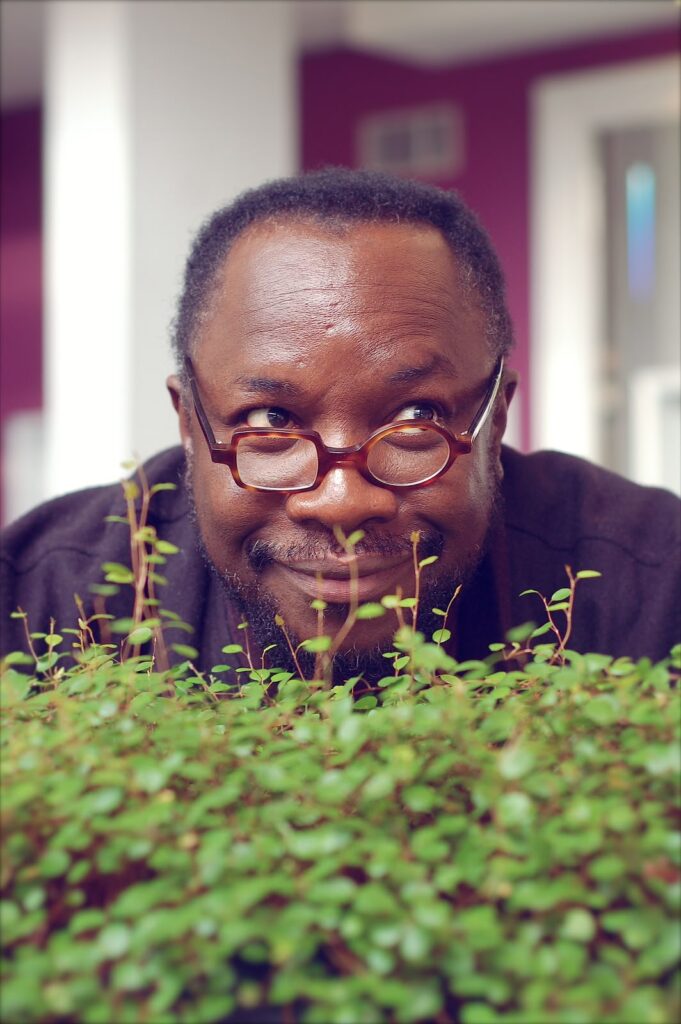
Yes, there’s a way of vibing between South American music, Carribean music, African music…
C’est vrai qu’il y a une résonance entre les musiques sud-américaines, carribéennes, africaines…
M.P : And that’s also the case with Ragga, it came from a mixture of all sorts of people coming together. Same thing with Samba, same thing with Cumbia, it’s a mixture of different people. This is the reason why, between South America and the Carribeans, it’s such a mixture, a melting pot of all people of different shades and different elements. We really identify with that !
C’est aussi le cas du Ragga, qui vient d’un mélange de toutes sortes de gens qui se rassemblent. De même avec la Samba, la Cumbia, c’est un mélange de gens. C’est la raison pour laquelle, entre l’Amérique du Sud et les Caraïbes, il y a ce mix, ce melting pot de toutes ces personnes de différents horizons et éléments. On s’identifie vraiment à ça !
And so do I !
Et moi aussi !
M.P : We’re on the same track !
On est sur la même longueur d’onde !
Yes I think we are ! Thank you Mad Professor !
Oui je pense qu’on peut dire ça ! Merci Mad Professor !
M.P : Thank you !
Merci à toi !
A talk between Mad Professor & Daniel Ayassou
Une conversation entre Mad Professor & Daniel Ayassou
En savoir plus sur SKUUURT
Subscribe to get the latest posts sent to your email.

